


“It’s Measured in Bodies”: The Real Cost of Fear-Based Leadership
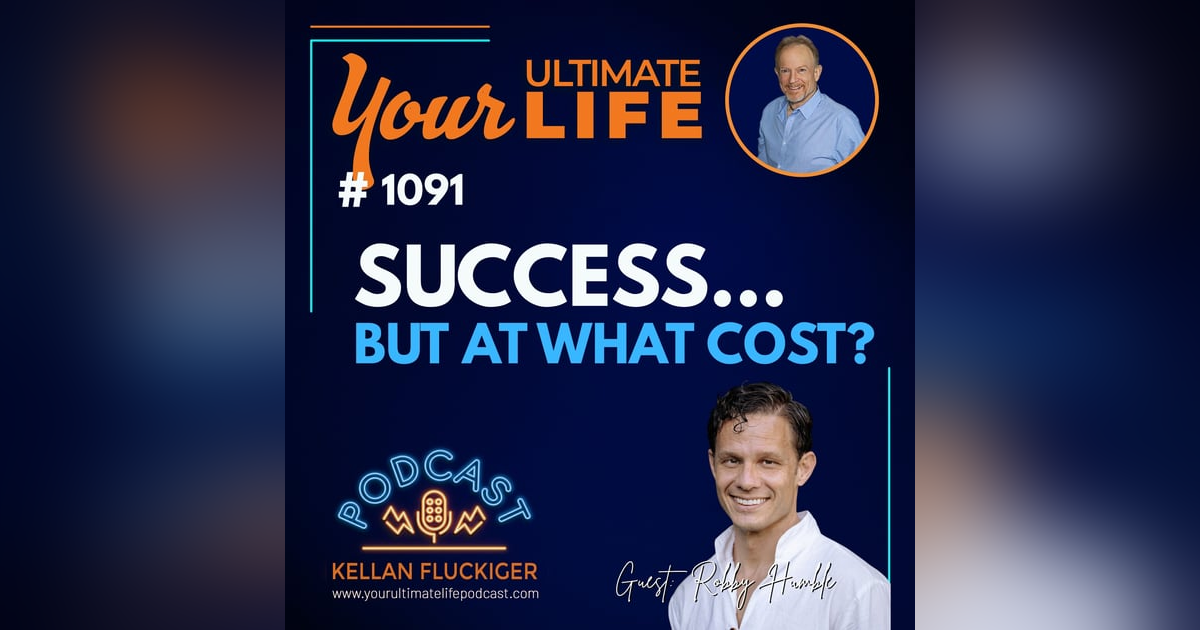


What if the way we’ve been taught to lead… is quietly destroying people?
In this raw and unfiltered conversation, Kellan Fluckiger sits down with CEO Robby Humble to expose the hidden cost of fear-based leadership — a cost that isn’t measured in dollars, but in burnout, broken relationships, and even lives.
This isn’t theory. This is lived experience from inside the system — and a bold challenge to lead differently.
Key Takeaways:
- Why fear and greed still dominate leadership today
- How corporations have “institutionalized fear”
- The hidden human cost: burnout, breakdowns, and death
- Why fear creates compliance — but kills innovation and meaning
- The myth of success and the “gold exterior, black interior” reality
- How leaders unintentionally perpetuate harmful systems
- The difference between managing people vs inspiring them
- The CALM leadership model (Center, Attune, Lead, Make Meaning)
- How to create psychologically safe, high-performing teams
- Why meaning — not perks — drives real engagement
- How to lead with love without sacrificing standards or results
🔥 Ready to turn your truth into impact? Join the Dream • Build • Write It Webinar — where bold creators transform ideas into movements.
👉 Reserve your free seat now at dreambuildwriteit.com
00:07
It's time for truth. This is the place for tools, power, and real talk so you can create the life you dream and deserve. Your ultimate life.
00:21
Subscribe, share, create. You have infinite power.
00:28
Hello there and welcome to this episode of Your Ultimate Life, the podcast created for you to help you create a life of purpose, prosperity and joy, not with magic, but with your skills, your gifts and your life experience. have a special guest today, Robbie Humble. Robbie, welcome to the show. Thank you. Good to be here. So, you know, I've had a chance to visit with you a couple of times and your message is is important. It's life changing and world changing. And
01:00
It is about leadership and love. And those are the words that I remember most. me why to start with you believe. With and you're you know, you're a CEO. OK, so this is a CEO, not of a two bit company, but of a real publicly traded company, a lot of employees and, you know, big stuff. So this is not somebody in their garage thinking of a weird idea. I want you to tell me why. Love.
01:29
is such a misunderstood thing in the context of business and leadership and why that matters that we change now in how that works. Hmm. Such a good question. Well, I think it's misunderstood for a number of reasons.
01:52
First, we have for decades in corporate America and frankly centuries in human history used the lover of fear to control people, to build civilizations, to build organizations, to drive monthly, quarterly, uh targets. We use greed to uh and fear and greed together.
02:19
to motivate people to do the things that we think that they should do. And those tools work. That's why we keep using them. They get the results. They get compliance. They get what you ask for. And by the way, if they don't, the people who are responsible for delivering on that
02:41
suffer the consequences of fear, they may no longer be there. And so the reason love I think is the first reason love I think is uh not common in business is because it is the culture is so dominated by fear, and that works and it's easier. It's much easier to tell somebody what to do than it is to inspire them to do something. The other issue around love being accepted, I believe,
03:10
is our culture around HR. We have made it as a policy.
03:20
Difficult to form human to human connections. I have a good friend who's a mental manager at a large fortune 500 company who manages a team of a dozen people and he does not even feel comfortable letting his employees know That he's concerned about their health and well-being Because he is afraid that it will be twisted in such a way that he will get reprimanded That he will lose his job potentially
03:48
that he will not get promoted, not get a raise. And so we have institutionalized fear and we have institutionalized a fear of human connection, which at the root of that is love. And we've imbued the whole system with fear, fear to drive performance, fear to prevent lawsuits, fear to control people and
04:18
I happen to have an orientation that there are two fundamental forces in the universe. There is fear and there is love. And when fear is the dominant force, is awfully hard for love to make its way into the picture, which is why I talk about having the courage to love. It takes a lot of courage to do this in the system that we're in today because of the way that it's received.
04:44
I believe you and let's just go down that road a little bit more. So we've institutionalized fear. That's a powerful example. I'm afraid to let people care about them, ask how they're really doing or anything like that, because that's going to be intrusive, invasive or prejudicial or somehow negative. And it's going to come back with repercussions. My question that was arising as you described that is, OK, so fear works. Punishment works. You get fired or you get reprimanded or you don't get promoted, whatever. That all works.
05:14
And my question is, what is that doing to us as a people? Yeah. Well, first of all, as a people, it's, it's dehumanizing us. It is chipping away at our souls. And I know this personally because I moved through a career in corporate America that most people in corporate America would kill for.
05:43
In 20 years, I have ah moved progressively up and to the right in my career in many ways. I have a Harvard MBA. I uh a graduated top of my engineering class at Wash U in St. Louis. I had a career of increasing responsibility, increasing performance, results, uh money, power, all the things that people want in business. And
06:10
From the outside looking in, I looked bulletproof. I looked like everything I touched turned to gold. But the reality was inside, I was turning black. So gold exterior, black interior. And ah it was a mismatch between me wanting to be the kind of leader that leads uh with courage, with truth.
06:40
that creates safe spaces for people to be courageous themselves. I wanted to be that kind of leader and I was operating in systems that told me that if that was my orientation, then maybe I wasn't cut out for senior leadership. And so I put on a mask. I pretended I hid that part of myself because I wanted the money, the power, the influence, the status and
07:08
The result for me personally was 20 years of recurring mental health issues. ah A couple different emotional breakdowns, uh 15 years apart in my career, one early in my career, one late in my career. There is a very real human cost and it is measured in bodies. Kellan, I talk about in my book, ah my very first job, my boss,
07:38
Her husband died while I was working for her. He was in his mid forties, uh senior most executive at the company and died of a heart attack. We didn't skip a beat. They put somebody else in his job. Production kept going. Nobody missed a beat. My boss's boss. So that was her husband. My boss's boss. So same environment, 23 years old at the time. My boss's boss was in his early sixties and would walk around
08:08
the manufacturing plant, wringing his hands, sweating, rubbing his face, fretting out loud whether or not he could make it to his retirement date in six months before the fourth heart attack killed him. Did he? That is a human cost. It's literally measured in bodies. Yeah. Did he make it? He did. Oh, well, don't know. mean, cliffhanger, you know, mean, hey, you didn't make it. All right, cool.
08:37
So I'm hearing bodies. I'm hearing dead people. I'm hearing health care costs absenteeism turnover broken relationships I have a situation where there was a startup that I was part of in 2000 or 1998 99 2000 two or three years and that was literally Sometimes seven days a week 16 hours a day because it was startup and there was no problem with money Infinite amount of money, but the time was insane and I the CEO then said about family I don't care how many people get divorced
09:07
I don't care how many people lose this, that, the other, and it happened, divorces and failures and health problems and everything. you're, this is, and why do we keep doing this? Is the greed a need to have, or are we so broken as, least in Western civilization, that I'll kill myself for the money and hope I don't die before I spend it? Is that really where we are?
09:34
You know, I think it's a myth that we all buy into. I think we're told.
09:42
you know, work hard, do the right things and you'll get ahead in life. And there are countless examples in society where that's not actually the case. And so we, we have all just bought into a system. And to be very clear, I have worked for a number of very good humans, uh CEOs who wanted to do things the right way, who cared about their people.
10:11
but the pressure of the system left them with the easier option of using fear. um Rather than speaking hard truths to the organization about what's happening, we're going to hide that information, hope that they don't see it or notice it, but they will because they're going to notice it in the layoffs. They're going to notice it in the
10:38
cut job, you know, the, the, the cut initiatives, they're going to notice it in the cut benefits. Um, and so it's not a, it's not a matter of bad people. Um, it's a system that has, that we have all grown up in and, and I was a part of that system. I'm still a part of that system. I'm just trying to be a beacon of light for doing it a different way. Uh, but it's not the
11:05
It's not a flawed human condition. It is systems that we have built that frankly go back way before corporate America existed before Rockefeller and Carnegie, there were kingdoms and, and fiefdoms and conquerors and you know, and it was all uh using the tools of fear and greed. And we know that there is a better way.
11:33
And I'm seeing that in my company. I stepped into a situation where uh my predecessor, a very good man, uh but it was very difficult business conditions and there was a lot of fear. uh I know, I think he felt a lot of fear. think the organization felt a lot of fear. And we stepped in as a new leadership team and did things a different way, uh showed trust, showed investment in the business.
12:01
led with trust and the organization followed and delivered. And so you ask about the human cost earlier and it is broken bodies. is broken relationships. The business cost is broken businesses. I mean, we look at the cycle of, of acquisitions. A lot of times that happens with, you know, the private equity world. People chase profit. They build profit as quickly as they can. They uh eat away not only at fat, but also muscle and bone.
12:31
And oftentimes the acquirer of that company ends up holding a bag of, uh, of not, not so good stuff. And so, um, you know, there, there, there's a better way. There's a way to build companies, um, quickly. can turn quickly, uh, culture very quickly. We did it in a matter of months in a fully remote environment, just by signaling that we were going to lead differently.
12:58
And we went from an organization that was scared and tired and fretful about their future to an organization less than a year later that is thriving and growing and ah and to a man and woman. Best I can tell every conversation I have where I probe into the organization to a man and woman in our organization. They are excited about the future. They are engaged. Let me be very clear. They are working hard. This is not about
13:28
you know, unlimited vacation time and foosball tables and free food in the break room. We have all the same corporate policies. I have the same constraints. I'm owned by a publicly traded company. We have socks compliance. We have all those same pressures and we did it anyway. We, we found a way to take a company that was embroiled in fear and to create a safe space for courage and for new ideas and for disagreement.
13:57
And we showed that we trust them and they delivered with not only significant business results, uh know, growth returned within just a couple of months. We went from not growing for five years to growing double digits within ah just my third month. We were growing double digits year over year. um And the best part, Kellen, um is
14:21
You know, there's this business cost. There's a lot of money left on the table by leading with fear. You get compliance, you get the minimum, you get exactly what you ask for. When you lead with love and you inspire people, you get more than you could ever possibly imagine because they bring things to the table. You unlock the intrinsic value inside people to be creative and to be courageous and they will far exceed what you or even they thought was possible.
14:46
And the best part about all this, Kellen, circling back to the question you asked a couple minutes ago, the human cost of fear is bodies and relationships. The human benefit of love is fulfillment and enjoyment. And I have people who have come to me, middle managers in my organization, who say, I'm probably working harder than I've ever worked. But
15:13
I show up better for my family. My husband has noticed that I'm more present. My wife noticed that I actually took vacation when we took vacation. uh I no longer lose sleep at night on Sunday nights because I dread going to work tomorrow. In fact, one woman said I lose sleep at night because I'm so excited about the work I have to do the next day. so, you know, there's real power in this, Kellen. And uh people don't do it because
15:42
ah Fear is easier because uh you go back to the whole, uh know, nobody ever get fired for buying an IBM. That's way back in the 70s or 80s. um Even before my time. ah But you have air cover when you lead with fear. You lead with love, it's different. And if um if it doesn't work out, you're you're you're you're the outsider, right? And so it takes a lot of courage, but
16:10
It is possible. We're doing it at our company. A number of others are doing it at their companies as well. There are people out there that believe in this. And that's who I'm really trying to reach, Kellen, is leaders in organizations that believe there's a better way but can't get past the system constraints, can't get past their own fear and biases around the paradigm that's been built around them. And so they just default to fear.
16:38
like they've been taught and like they've been taught as safe. So let's talk about how to do this. Cause we talked about, it's not a flaw in the people. Okay. It's like, you know, suddenly we have all the jerkweeds and they work in certain jobs because they're, because they're bad. have a system and the system has been developed over centuries and millennia that rewards the easy path, uh, which fear and greed, the cost is bodies and relationships and health and
17:07
You know, in old times, I guess it was, you know, walk the plank or whatever. So, you know, literally death. So and we have this system and we we dabble around the edges by putting in HR systems and employee this and that. But people are afraid to use them and they're afraid to, know, like your friend, afraid to even find out how people are doing, you know, all that sort of stuff, which is obviously not an effective way to make the change of the system.
17:37
And you mentioned you, you wanted to, you found a way to be in a position to try this out fully exposed, knowing that if it didn't work, could be your head or your job or whatever. And you said, and I know other people. So let's talk about. What's it going to take like this week, this month, this year to start to like the system is like a cruise ship?
18:07
going to turn like fricking slow. OK, probably. Right. It's not it's not a speedboat like a ski boat. So what's it going to take? You know, I mean, you have a pedigree, Harvard, MBA, CEO, blabbery, blag, OK. What's it going to take for us to begin to steer this ship in the direction that you've described? It starts with leaders, Kellen. It starts with leaders.
18:37
who feel this. And I know that there are countless people out there that really resonate with this message because they've told me, um you know, we're building a movement around this and ah there are countless people um that leaders of organizations, CEOs, um particularly middle managers. And so we can talk about, you know, the difference between
19:05
CEOs and middle managers and how they implement this. ah But there are countless people out there that want to do this. And so uh it starts with you. If you're hearing this and this resonates with you and you think that this is something that would align with your values and also help you deliver better business results. And I'd love to talk more about how we get those better business results as a result of this.
19:32
But if this resonates with you, it starts with you. And if you're a CEO of a company, it, you have a speedboat. So you may be the speedboat that's, that's parked on the cruise ship that takes a lot of time to turn, lower your speedboat from the cruise ship. And if you are a CEO, you get to pick the direction you get to set in many ways, the policies you set the tone, you set the standards of accountability.
20:02
You, you display yourself what this kind of leadership looks like. You create safe spaces for people to, to be courageous, to say hard things, to do hard things. It starts with you. It's, it's, um, you know, I do believe this is something that could, could change on a broad scale. And I believe it must change on a broad scale. This is not just a business issue. This is a government issue. This is a nonprofit issue. Wherever there is leadership, there is fear.
20:31
And it starts with the leaders. It really does. And if you're a CEO of a company, there's a very good chance that you have every lever that you need at your disposal to lead in this way. And it starts with you. It then extends, of course. One leader can't do it all. And so you have to surround yourself with people that are also of this mindset and lead this way. And then you have to mentor them.
21:00
in how to, again, create safe spaces for courageous conversations, for difficult conversations, for difficult decisions. It really, it starts on the individual level. And then once, once you as a leader really buy into that, then you can start to spread that out. It starts then in one-on-ones. You create a different kind of environment where people can be honest. And one thing that we've done in my company is we start every single meeting
21:30
at our leadership level and this is happening at other levels in the company as well with the question, what are you bringing to the meeting today? And so we set the tone from the very beginning of the meeting before any business gets discussed. We're going to talk about what we are showing up to this meeting with what we're carrying as humans. And a lot of times that's great things. Most of time it is, but sometimes it's a difficulty in a business problem. It doesn't have to be just personal that you're bringing to the meeting. It can also be
21:59
I'm struggling with this. I'm nervous about this business problem or excited about this business problem, or I'm having this issue in my personal life. And so once you yourself commit as a leader to doing things differently, you have to give other people permission to show up the same way and to show up as human. And so once you do that with yourself, you do it with others and then we can proceed. uh
22:24
further down my leadership model, how that extends to the broader organization. But you asked, how do we get it started? It's with each individual leader seeing a different way of doing it. So I want to do two things. We've said a lot of this and that, and you've talked a lot about safe spaces and courageous stuff. those are descriptive terms about a thing. Yeah. So I want to talk about the thing. Yeah. Let's get into the thing.
22:52
And before we get into the thing, I want to talk about it. So let's say there's a CEO or two or 10 listening to this show. And he said, wow, I want to know more about that. So I want you to tell me, tell the audience about the book, the name, the principles, the purpose. And then I want you to take it apart so we can actually talk about the this that we keep talking about. Yeah. Yeah. Great. Great. Well, so the book is called Love and Leadership.
23:21
not available yet. It'll be available in late March on Amazon. But it's called Love and Leadership and the subtitle is Cultivating Authority Without Fear. The book is structured in a unique way. I haven't read a leadership book quite like this. It's about 80 % memoir. So I walk you through my career journey starting at
23:48
I actually even go back to a vignette from my childhood when I was in high school and walk you through my experience in the corporate world, succeeding inside this system while also internally really struggling with the ways that it requires me to move, the things it requires me to say, the mask it requires me to wear. And so you'll see in the book my story of going from
24:19
a 23 year old manager, uh all the way to a 42 year old CEO and the steps along the way. And the book is structured in a way that you get the memoir aspect, which is the story of my life and my successes and frankly more about the challenges because that's where the growth and the insight really comes in. And then we step out of the story, we step out of the memoir.
24:48
ah at four different places throughout the book to just pause and extract the lessons ah that we've learned from the last few chapters of my lived experience personally. And then we get to the end of the book and we articulate in a consolidated form a leadership philosophy that I have formulated over 20 years of lived experience. I'm not a coach. I'm not a consultant. I'm not an academic.
25:17
I've read a lot of the books. I've worked with a lot of coaches, but this is a leadership model that was born from my lived experience. It was not born from something I read in a book, read a lot of books, used a lot of books in my leadership. uh But what you find in the book is just a fundamentally different model from anything that's out there today. And I make the assertion in my leadership model that
25:48
Two leaders can say and do the exact same thing and get vastly different results based on the way that they show up in the room. And most leadership models talk about all the things you should do in order to succeed. The leadership model in my book, Love and Leadership, Cultivating Authority Without Fear, it's about who you are as a leader. It's about how you show up. It's about, it's not about doing, it's about
26:16
being. So who are you being as a leader? And that's where we got into the conversation earlier about starting with yourself. It starts with yourself. And um I've developed uh an acronym, which makes the model easy to remember and something that you can kind of implement uh in your daily life. It's been very, very powerful for me as I've written the book and actually put this on paper. It's been a
26:43
an incredibly valuable tool for me on a daily basis to help me step up to the plate better. um So this that let's talk about what this actually is. So the the leadership model itself follows an acronym called CALM, C-A-L-M, which conveniently also uh is uh is the feeling you get from the leader that is really embodying this this leadership practice. The C in the acronym
27:13
is center yourself. And so this is where we talked about earlier as a leader, it starts with you. ah As a leader, I personally spend a tremendous amount of time trying to understand myself better. Why do I behave the way that I do? Why do I get angry when I do? Why do I get nervous when I do? Why do I get excited when I do? Why do I make decisions quickly sometimes and make decisions slowly other times? When have I made quick decisions that I later regretted? ah
27:43
How uh is my internal state? Am I um anxious or am I calm? And so as a leader, I'm working on centering myself because I have this fundamental belief that the internal state or to use another phrase, the nervous system of the leader becomes the nervous system of the organization.
28:12
There was a really interesting study done by UCLA in the 1960s that showed that only 7 % of your communication is the words you use. The rest is tone. I think about 35 % was tone and about 55 % was body language. And so the way that you show up,
28:38
is really what affects the room. And so it starts with centering yourself as a leader. That's the C. The A in calm is attuned to others. So once you've understood yourself, you've quieted the noise in yourself, you understand the way that you show up and the motivations and behaviors, uh then you can start to do the same with others. You can attune to others. can, and that's what the A is, attune to others. This can happen in one-on-one meetings where
29:06
You're gaining a deeper understanding of who this person is, the experiences they've had in life, the successes, the failures, what motivates them. Once you're quiet yourself, you can now listen to others and really start to attune to them. And you can do that in one-on-ones. You can also do that in group meetings. I'm going to ask a question about that because here's something I know from my own work and books that I've written to coaching and so forth is this, know, attuned to others sounds
29:35
sounds nice and okay, all right, all right, I'll listen to them. What I'm hearing and I want to say this to you and I'm to say it really boldly and you can fix it if you want to. If I learn, I, I, if I center myself, understand why I'm this or that, or I just notice my different emotions or feelings and I do whatever's required so that I am centered and I'm here, I'm not somewhere else or some when else.
30:03
And then I learned this attunement. It's not like a checklist. It is also something you become. And that means you become a person who walks in and immediately become aware and an absorber of that energy so that you it's not a thing. Well, I've got to sit here for a few minutes and attune to the different people like it is a thing that you do. Speakers talk about reading the room. Yeah, you practice this.
30:34
and you can walk in and know what everybody is doing pretty close or thinking or feeling quickly. So this is not like, okay, I gotta take 40 minutes to get myself centered and then I gotta take a half an hour to tune to everybody and maybe an hour later after everybody's fallen asleep, we can start the meeting. It's not like that at all. It is a skill that you learn that you can do quickly. Am I off base there? You're 100 % right and I appreciate you for bringing that to a point. And in fact, you know,
31:03
Centering yourself is a daily practice, right? It's just bringing calm to yourself. Attuning to others. Once you walk into a room with other people, within 10 seconds, people know what's up. And we all know this as people who have worked with leaders. When a leader walks into the room, slams the door and the walls shake, and they plop down on the seat and say, let's get started, that's going to be a very different meeting from a leader walking in.
31:34
shaking someone's hand, smiling, asking how their day went, and then cracking a joke to start the meeting. And that's not that you have to be a jokester, right? But I just draw that as a very clear distinction between one way of showing up and another way of showing up. And so when you walk into the room within the first 10 to 20 seconds, you know exactly what the mood of the room is. And as a leader, if the room is anxious,
32:02
if the room is fearful. It's my job as a leader to understand why that's the case, to ask the right questions, to understand why they're feeling that way. And we talk, I talk a lot about creating safe spaces, like attuning to others is all about creating uh an environment where people feel comfortable saying what's really on their mind. And that is a massive business advantage. When you create a space,
32:32
where people can truly speak their minds about the challenges they're facing, about the challenges they foresee, about the opportunities that they see that they might not have otherwise brung to the table. ah When you attune to others and you create that safe space, you create real business advantages over your competition. And I have a belief, Pat Lincione is an author that I really love and follow. He says the only competitive differentiator in the world today.
33:00
sustainable competitive differentiator in the world today is the health of the team. It's because you can see around corners. You can take advantage of opportunities that others don't and avoid challenges that others run into. And it all does start immediately when you walk into the room. If you walk into the room and you're closed off and you're angry, you're worried, you're fearful, you're not going to be able to sense what's going on with your team. Your transmission of energy is going to be so loud.
33:29
that there will be no space for anybody else. People, I need to throw something in here. People, whatever they feel, either belittled or ignored or any negative emotion, number one, they quit listening. And if they quit listening, that applies to the leader too. So if you go in there frustrated or negative in any way or preoccupied, you have quit listening as a leader. And so you're not actually listening and the listening isn't verbal chatter. The listening, like you said, is 90 something percent.
33:58
the energetic vibe. And so we talk about vibes and that kind of stuff. All that crap is real and it isn't crap. It is like, that's the truth of the energetic exchange. The words are almost the decoration. Yep. Yep. And we, we transmit a state. We are all animal bodies. We have a lot of cognition on top of that. We're smart.
34:26
We create things, we create environments, we tell stories, but at the end of the day we are animals. And, and I'll go back to the study from UCLA. 7 % of our communication comes from the words we use. The other 93 % comes from the way that we show up. So get to L. So L is lead with steadiness. So this is all about, frankly, uh, Kellen, this is doing many of the things
34:56
that a lot of the other leadership models uh tell you to do. Most of the other leadership models sit in this space. So lead with steadiness. Once you've centered yourself, you've attuned to others, you've created safety in small spaces, now you have to extend that bubble of attunement and clarity and safety to the broader organization. And that's lead with steadiness. And it really has three big components. The first is uh clarity and truth. So m
35:26
being very honest with your company about the reality of the situation. And I did this in my company. My first, it was my second town hall. was there about a month and I shared with them a slide with some financial numbers that no one had ever shared with them before. In fact, town halls, I don't think were really happening before I got there. And so this kind of communication was brand new and I showed them the exact situation that we were in and was very honest with them. And
35:55
Then I told them, this is how we're going to get to the other side. This is the vision. I'm very clear about how we're going to get there. And very importantly, Kellen, that wasn't Robbie Humble's vision that he walked in with before he became CEO. This town hall happened after a month of walking around and talking to people and listening and interviewing and serving customers and clients. And so I was able to come to the company.
36:23
and say, this is our reality, this is the difficulty that we're facing, this is the challenge in front of us, and based on everything I've heard from you, this is the best thing that we can do going forward in my assessment as a leader listening to what you've told me. So it starts with clarity, it starts with truth. The next piece is putting in place infrastructure. So you've got clarity about a vision and where you wanna take the organization.
36:47
You have to actually execute on that. And that means the right organizational structures. It means the right people in the right seats. It means creating processes. It means getting the right tools in-house. This is the space where all the strategic initiatives live. um And uh these are critical to delivering on the clarity of vision that came first in Lead with Studiness. And then last,
37:14
and certainly not least is developing standards and systems of accountability. So you create clarity and vision with truth. You create infrastructure processes, systems to be able to deliver on that vision. And then you create um metrics of accountability. These are the metrics we're going to track. This is the performance we're going to hold ourselves accountable to. We're going to talk about it every time we get together. And we're going to talk about how we're doing versus that. And we're going to hold ourselves accountable. And so this is really, really important.
37:43
We've we've gone a while here now talking about love and leadership and I've yet to make this statement um Explicitly like love is not about eliminating standards. It's not about eliminating accountability It's actually creating a place where standards and accountability are sustainable because people feel cared for people feel um Like they're in a fair environment um people don't
38:11
care what you know until they know that you care. And so by centering yourself, attuning to others, leading with steadiness, you create an environment where people understand what the expectation is. They feel connected to their leader. They feel connected to themselves. ah And then from there, you go to M, which is make meaning. And as I kind of visualize this model, Kellen, for me, the C is
38:40
kind of a single point, it's the leader, it's one person. The A, attuned to others, is a small group. So maybe that's one on one, maybe that's a meeting of six to eight people. So you go from one dot to a few dots. with steadiness, lead with steadiness takes you to many dots. um And that could be hundreds or thousands of people, uh millions, depending on the size of your organization. And then, so you go from one dot to a few dots to many dots and make meaning is,
39:09
kind of the connective tissue between all of that. It ties it all together and it gives a higher purpose to what you're doing as an organization. Claims adjudicator. You're not just, so I'm in the auto warranty business. We adjudicate auto claims. um My claims adjudicator isn't there just to give a legalistic viewpoint on whether or not ah
39:37
a claim should be approved or denied, we show up with empathy with customers. uh We think of them, we actually have uh an elderly lady that we use uh called Mabel. This has been part of our company for decades. And we think about Mabel. Mabel's car has broken down and Mabel needs that job to pick up her grandkids or to get to her job or to get to her church. And Mr. Claims adjudicator, you're not there to make a legalistic
40:06
determination as to whether or not we approve a claim, you are there to help that customer on what is probably one of the worst days of their life when their car has broken down and you're there to help give them peace of mind that they're going to be okay. You're going to, we're going to help take care of them. We're going to help them get back on the road to the best of our ability within the constraints of the contract. And so you're not just there to do a job, to clock in, to clock out, uh, eight hours a day. You are there to,
40:36
help people live their lives better by having vehicles that work, that get them to their livelihoods, that get them to their families, that get them to their communities. And so when you make meaning for people, all of a sudden the vision for why we want to grow and how big we want to get and who we want to, how we want to position ourselves as a company and all these, uh this infrastructure and systems we put in place and the way that we organized people and then the standards and accountability, all these things make sense.
41:06
when you add the meaning of this is why we're doing this. And if you really do the job of making meaning well, you don't have to do such a hard job of holding people accountable to the standards that you set. They will start to self-select into holding themselves accountable to the standards because they are enrolled in the mission. They are enrolled in the meaning that you have made for them. And so the standards still exist, um but people start to hold themselves accountable to it. And then
41:34
when we don't meet the standards and that happens, we're not perfect. um We now have a space, a very open space to be able to talk about not meeting that standard. And it's not adversarial, it's not, don't know why you're holding me to this standard. It is, we are doing this because we serve this greater purpose. And this is what we're aiming for as an organization and as individuals. And people will either self-select into that, but sometimes they don't.
42:00
sometimes that's a parting point, right? If people don't really buy into the meaning and the purpose of the organization, then they might not be the right fit. And that's also what love is about, Kellen. You know, I think love is truth. Love is clarity. And sometimes the truth is that the people we have in our organization aren't the right people for what we want to do as an organization. And so that layer of adding, making meaning to it also allows you to um talk about core values.
42:28
and to talk about the way that we want to show up as an organization and present ourselves. um And it's not just about doing, it's about being. um that's how you get to the hard conversations. That's how you get to the outcomes that others have trouble accessing. You know, I was thinking about the meaning part. you said auto claims and someone could make other kind of widgets or aircraft parts or, you know,
42:56
gardening or whatever it is if you what I'm hearing is you step back from the Outcome of the activity. There's a reason we do any activity and if you allow you create the space in fact encourage and push forward the space and the conversation about the place that this outcome whatever the activity is has in creating a human experience and life and whether it's transportation or
43:25
food or vacation or whatever it is. And I don't think there's been a lot of effort. In fact, I know there hasn't been a lot of effort in the meaning making part of things. And that's why people feel like cogs in a machine and don't care about the company. You nobody cares about me and all the stuff that you hear about employee experience because we haven't ever either taken time or allowed space or, it's going to cost too much money and it's all woo woo crap anyway, or whatever.
43:53
We have that story about why it's not important and it returns us to dignity. It returns us to the truth of who we are. Like if somebody was in church with somebody, same person, the way you talk to them or be with them is completely different because that meaning is woven into the fabric. And you're saying we need to weave that into the fabric of our employment and our productivity.
44:24
So I'm gonna ask you, that's great. So the two questions I wanted you to answer, did. I want you to tell me now where, you know, the book's coming soon. Where can we wait with bated breath? Where do we need to go to be ready for this unveiling and to push this forward? Because the truth, you said it very clearly, it starts with you. Because if you think this nice conversation, I wish my fricking boss had heard this.
44:51
You're thinking about this wrong. If that's what you're hearing out of this, you're missing the point. It starts with you. So the question isn't, wish my frickin boss, the question is, are you listening and where are you either applying or not applying in loving yourself with truth and honesty, which has nothing to do with permissiveness and the people that you do interact with. And maybe you have some authority over them and maybe you don't, but influence.
45:21
is more powerful than authority anyway. So anyway, where do we go to find this out and to find more about Robbie? RobbieHumble.com is the best way to find me. And to be very clear, that's Robbie with a Y. So R-O-B-B-Y-H-U-M-B-L-E.com. So it's Robbie with a Y and uh Humble. RobbieHumble.com, you find me. Do you ever get razzed about having a name of Humble? Oh boy, do I. And I was going to say.
45:51
Robbie humble.com talking about love and leadership. Okay. So I just, you know, I just had to throw that in there for fun. Well, I'll say, Kellan go to the website. Um, you'll see, you'll learn a lot more about, uh, you'll, you're here. A lot of the things we talked about today, but you'll also, uh, there are buttons all over the page, uh, to take you to a landing page where you can, um, provide your, your name, your email address, and you can become a part of the movement and we'll be doing announcements about the book release.
46:20
So you can find out how you can participate in that in a meaningful way and we're building a community. uh The purpose of this ultimately is to build a movement around changing from the paradigm of leading through fear and change to a paradigm of leading in love. And if that resonates with you and you want to be a part of that movement, super easy, go to RobbieHumble.com, sign up for the mailing list and you'll be in the community and you'll get all the updates and you can join us.
46:50
And those that are listening, how could you not do that? I you've all had bosses that sucked or work situations where the machinery sucked and people felt trapped and jobs that you hated and situations you couldn't wait to get out of. And this is an invitation to be part of the movement to change it rather than sit on the sidelines and complain. So go there, RobbieHumble.com, get on the mailing list and explore this uh new and
47:19
energizing thought about bringing humanity, creativity, love and kindness back into the world of business and money. So Robbie, thank you. Thank you. Appreciate it. I want to really appreciate your love, your insight, your willingness to take this stand and be the person to bring this forward in the world. Well, thank you. It's my pleasure. Truly.
47:48
Listeners, please do that. Like, go there. Get on the list. Doesn't cost anything and it doesn't obligate you to buy anything. But it will answer a question for you. And that question is, isn't there a better way? And the answer is yes. And there's a place to find out with about it. And I can promise you that if you take that opportunity and apply it to yourself first, you will be moving forward with joy.
48:16
power and influence in your own life as you create your ultimate life. Right here, right
48:34
opportunity for massive growth is right in front of you. Every episode gives you practical tips and practices that will change everything. If you want to know more, go to kellenflukegermedia.com. If you want more free tools, go here, yourultimatelife.ca. Subscribe, share.